4 to 1
Engineers on our two mobile apps
It took four engineers to get the first app out. During 2026 the team came down to one full-time contractor, who integrated and released my code. How that happened ↗
AI in practice · Handy Homes
I’ve spent my career in revenue and go-to-market. At Handy Homes, the home services company I founded, I put AI to work on the business itself: estimating, support, finance and marketing.
4 to 1
Engineers on our two mobile apps
It took four engineers to get the first app out. During 2026 the team came down to one full-time contractor, who integrated and released my code. How that happened ↗
About 80%
Of the full-stack development, done by me
My estimate of my share of the work across both apps by the end.
Days to minutes
To fix a support issue
Issues used to take an engineer several hours to days. With AI connected to our Salesforce environment, most were fixed within minutes. My account, not a measured benchmark.
Operations
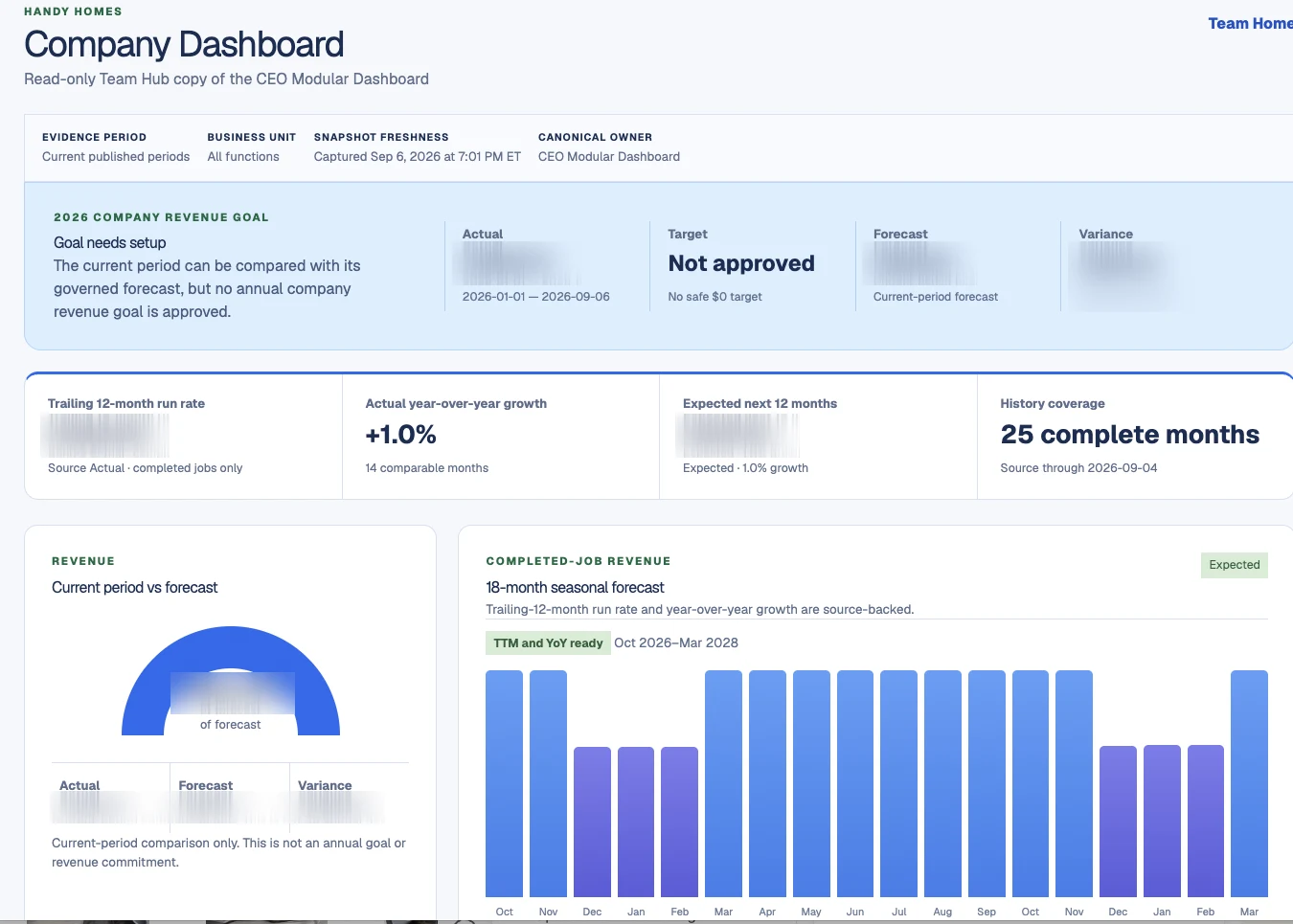
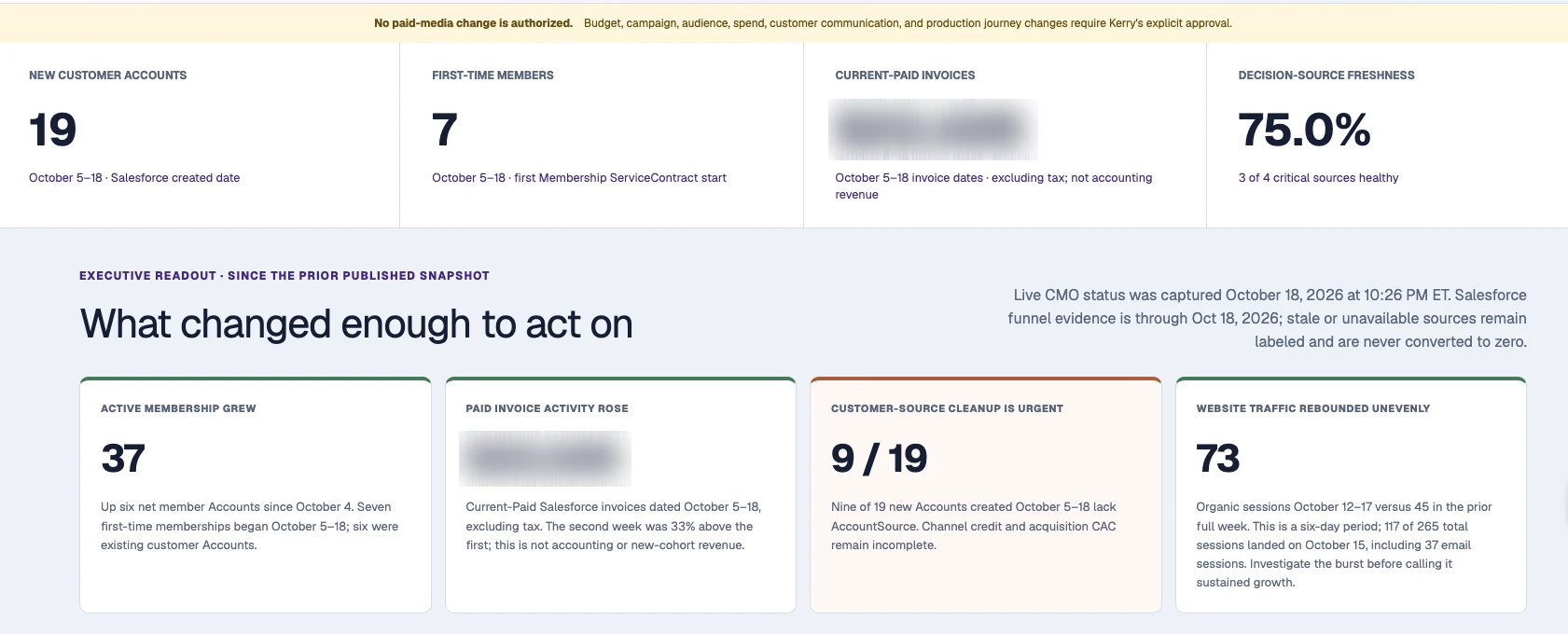
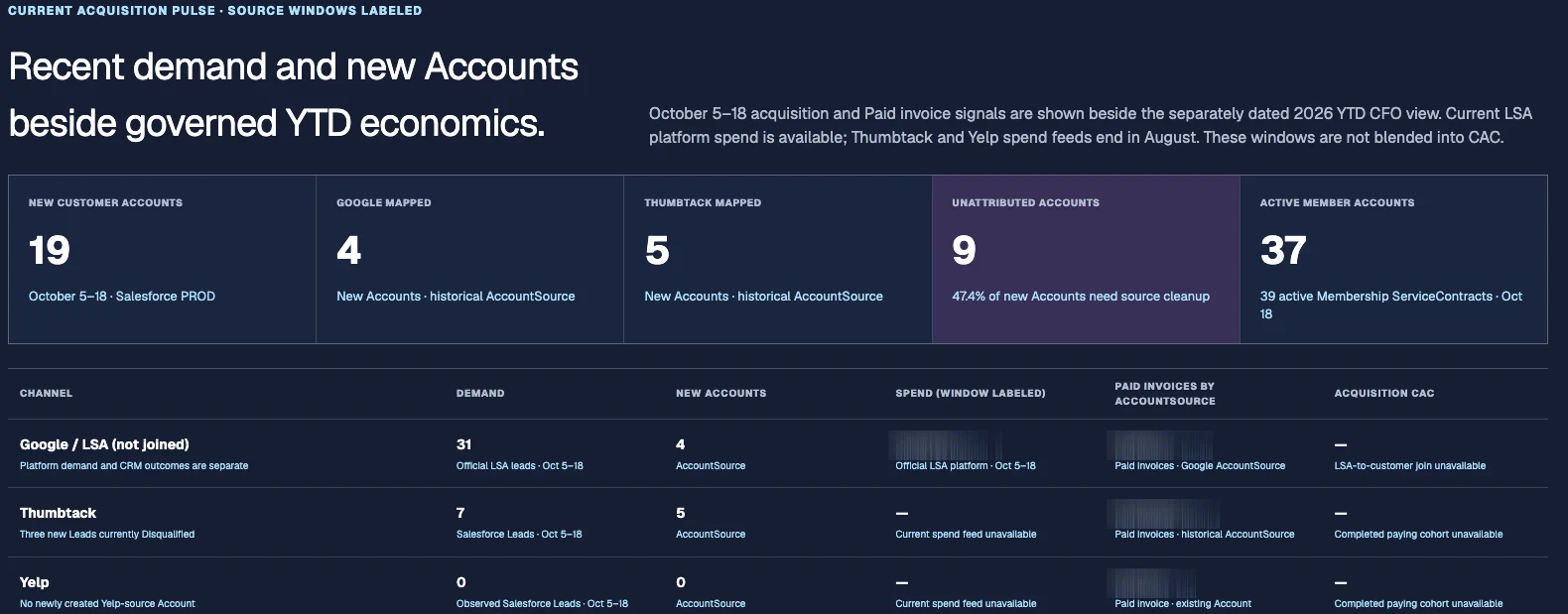
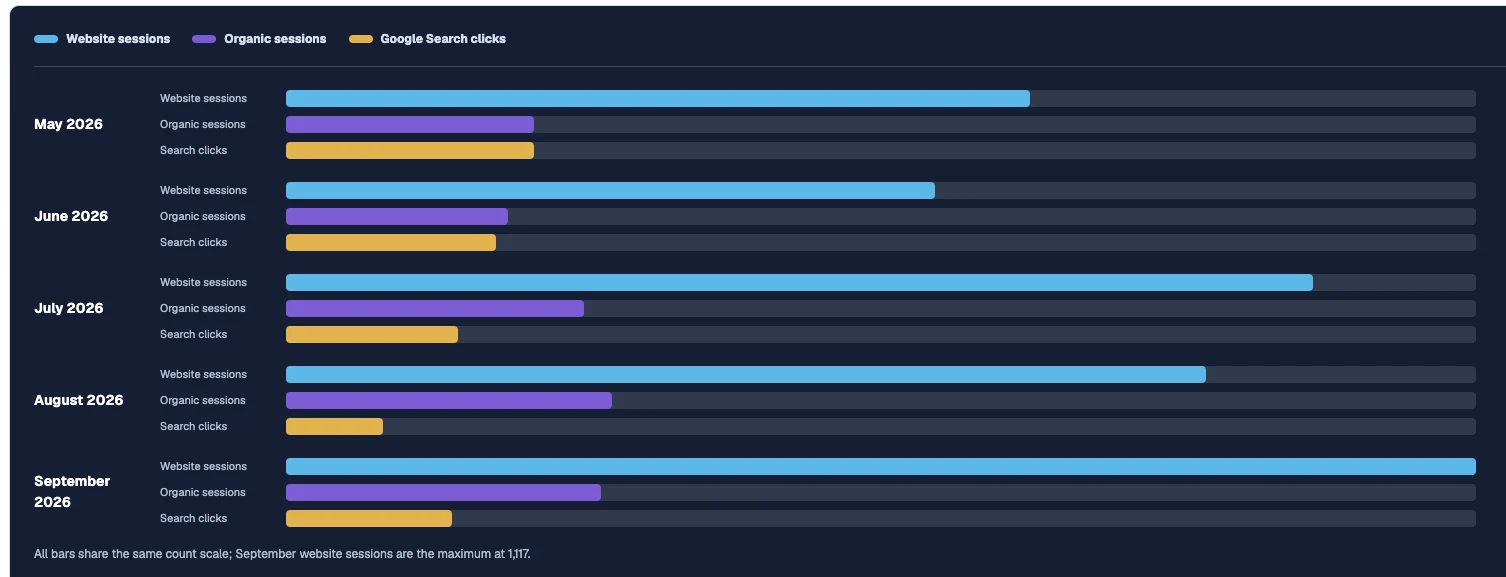
Each agent had a defined set of responsibilities and a person who checked its output. Select any dashboard to enlarge it.
Estimates customers could trust.This had the biggest effect on revenue. AI helped us build accurate estimates covering labor and materials, with the scope of the job written out clearly.
A finance agent.I connected QuickBooks, Stripe, Salesforce, Amazon, Google Analytics and an SEO data service through their APIs into a data warehouse on a Mac mini. An agent kept a live financial dashboard and did the monthly reconciliation. I ran it alongside our bookkeeper for two months. Once its month-end close matched the bookkeeper’s, it took over the task.
A marketing agent.It handled attribution, SEO, analytics and conversion. For the first time I could see what a customer cost to acquire across Thumbtack, Google, Yelp, organic search, referrals and partners. Google returned about $6.50 for every dollar we spent, so we cut back Thumbtack. When Yelp also proved better than Thumbtack, we moved spend to Yelp.
Support, in minutes.A support issue used to be posted to chat and wait for an engineer, which took several hours to days. With AI connected to our Salesforce environment, most were fixed within minutes and rarely took more than a couple of hours. Customers and employees were less frustrated.
Documentation that stayed current.An agent kept our internal documentation and user guides up to date as the systems changed. We could not have staffed that.
Job stories for local search.A workflow found completed jobs in our system, gathered the technicians’ photos, and drafted a social post with images. It saved a great deal of time and helped build our local search presence.
The honest part
An autonomous agent for lead follow-up.We tried it. I did not get the consistency and accuracy a first conversation with a customer needs, so that job stayed with our customer service representative. It can be made to work, but it was not worth the time it would have taken us. This is a job where Salesforce’s Agentforce would likely be the better fit.
Long coding sessions.Over a long session, Codex lost the thread and drifted. Building one feature set at a time, and working up to the overall architecture, held together far better than asking for everything at once.
Agentforce for development work.For building against our Salesforce environment we found it hard to use, removed it, and used Codex instead. The lesson was to match the tool to the job.
Full autonomy, early on.Agents that ran unattended were difficult or impossible at first. By 2026 I was having limited success, in narrow jobs with a clear check at the end.
Back to the day job
AI is very good at pulling several data sources together and answering a specific question. It is also good at any process that suffers from inconsistency. A revenue team has plenty of both.
I would start with the frontline managers. They carry the detail, and the forecast is only as good as their read of each deal.
Check every forecasted opportunity against the stages and exit criteria we have defined, so managers can validate the forecast and spend their time coaching.
Analyze customer data to define the ideal customer from specific attributes, and keep that definition current as the customer base changes.
A detailed, data-driven comparison of how deals actually move against the process we say we run, feeding territory, capacity and segment plans.
Better intelligence on the company they are selling to, the gaps in their own process on a deal, and an early read on fit, so poor-fit areas are qualified out at the start.
Board slides and team decks built from live data, with the many moving pieces tied into one current view of the business.
The questions that never get answered because nobody has a week to spend on them. This is where I would experiment first with newer tools.
Contact
If this is relevant to a role you are hiring for, I would be glad to talk through the work in more detail.